Polish Londoner

These are the thoughts and moods of a born Londoner who is proud of his Polish roots.


Wednesday, 9 September 2026

Now I am 80.

Yes, I have run my race and I’ve won. I have reached 80! I have reached the age of maturity, even though I still remain largely immature. I am a child of the post-war Polish emigres in the UK who settled here after the most heroic, dramatic and tragic experiences in the Second World War. My parents, my Saturday schools and my years as a scout have imbued me with a deep love and sense of duty to Poland as my true country of origin, even though I have spent my life in the comforting surroundings of Britain to whom I am grateful. I want to salute and thank my wife Albina for moving here from Poland and for surviving 53 years of marriage and giving my life full support, as I pursued my interests, and for bringing up our son Sandro, now living in Finland but visiting us today, of whom we remain immensely proud. I would like to salute my friends, so many of whom have now departed permanently, who have accompanied me on this journey through the Polish Solidarity Campaign, through my years as a social campaigner and as an Ipswich, and later, Ealing Councillor, my years in Kimpton Brothers and the London Chamber of Commerce, my activities as spokesman for the Polish community in the Federation of Poles in Gt Britain, and the POSK community centre where I am still a Director. But most important of all is still the future with more exciting journeys with my wife, more books to write, and the fervent hope of future generations surviving in an exciting and menacing future. 6th September 2026

Friday, 1 May 2026

The West was not to be identified solely with colonization

Dear Editor of I Paper, A good try by Afua Hirsch to identify Western values solely with colonialism (“Trump shows us what the “West” really is: a made-up history of white colonisers” 01.05.26) but I don’t buy it. Western values are built on the Latin tradition of individual free will and individual responsibility for their own behaviour which combines the best tradition of Roman virtues and Christian values. Western civilization was built on the cult of the individual long before any of those barbaric countries underwent the Renaissance or acquired any colonies. The more advanced Eastern civilizations indeed treasured Greek philosophy and Roman law, but they did not adopt it for themselves. The Magna Carta and the Rights of Man had no connection with colonialism. To take another example, Poland chose to accept the Christian faith from Rome, rather than from Byzantium. Its earliest history was written in Latin. By the XVIth century Poland had evolved into adopting the cult of Greece and Rome and setting up a parliamentary republic with a constitutional elected king. Western values for sure, but Poland had no colonies or imperial traditions and protected Jews from persecution in Western Europe. Yours sincerely Wiktor Moszczynski

Sunday, 5 April 2026

Trump wants to use violence

Dear Editor, In answer to your headline "Trump wants to use violence" (04.04.26), there has been numerous evidence in the past of Trump's exceptional physical meanness and belligerence, even during his first presidency. At a public appearance with police forces from around the U.S., he mocked the way police use their hands to protect the heads of suspect criminals they arrest as they place them in their cars. Also, he urged the military to use waterboarding and other forms of torture during interrogation and had to be corrected by the Defense Secretary General Mattis. No other dictator, not even Putin or Xi Jinping, boasts about wanting to use torture, even when they do use it. Yours sincerely Wiktor Moszczynski

Monday, 24 November 2025

Do not surrender the Donbas fortress towns

Dear Editor, I share Molly Blackall's concerns in "Giving up fortress belt would leave Kyiv exposed to future Putin attack" (i paper 22.11.25). In a realistic world, membership of NATO was always a negotiating ploy and Crimea a ready offering, but retaining an army and the fortress towns on the Donbas was crucial not only for Ukraine's morale, but its security as well. Otherwise we have a Munich-type settlement as in 1938 when Czecholsovakia was forced to surrender the Sudeten territories which included that country's crucial fortifications. As a Pole, I always felt that the defence of Czechoslovak independence should have been crucial to Poland's security, just as Ukraine's independence is now. Yours faithfully Wiktor Moszczynski 88 Isambard Court, Paddlers Avenue, Brentford TW8 8FP, tel 07786471833 Published in The i Paper 24.11.25

Wednesday, 29 October 2025

New taxes in the next budget - Letter to Editor of The Times

Wiktor Moszczynski 27 Oct 2025, 20:29 (2 days ago) to letters Dear Editor, On reading your correspondent's latest researched speculation on the next Budget ("Reeves looks at spending cuts as well as tax rises" 28.10.25) it is clear that while the Chancellor and Prime Minister are desperately seeking to find the best economic solution to the current budgetary dilemma, both Rachel Reeves and Sir Keir Starmer have run out of political road. They want and understand what is best for the U.K. economy, but politically they cannot satisfy the hedge funds, the unions, the Labour Party and the electorate at large with a solution they would satisfy all. Sir Keir has always been an honourable man, with a deep commitment to public service, but unfortunately a poor politician. But he and the Chancellor can make up for their past mistakes, which only compounded the toxic legacy left them by the Tories, by opting for a 2p increase in income tax, and then acknowledging honestly that they have been forced, despite a heroic effort, to break their electoral promise, and to fall on their sword and offer to resign. This would still give the Labour Party ample time and opportunity to elect a fresh new leader free of the ballast of keeping an impossible electoral promise. It would stabilize the economy, give the future government more headroom for emergencies and a chance for Labour to challenge the fringe populists on the right and the left. Yours faithfully, Wiktor Moszczynski Published in The Times 29.10.2025

Friday, 17 October 2025

Hamas could thrive in a power vacuum

Dear Editor, I concur with your correspondent's article "Hamas could be more dangerous than ever" (15.10.2025). There cannot be a more dangerous phase after the end of bitter hostilities, or after the bloody fall of a tyrant, than the existence of a political and military vacuum while expectations of peace and retribution are high. Witness the civil war in Libya after the overthrow of Gadaffi, or the protracted violence in Iraq after the U.S. disbanded the Ba'ath Party and the Iraqi Army, following Bush's so-called "complete victory" over Saddam Hussein. The reason Europe did not descend into chaos in 1945 was because of the existence of Allied armies of occupation and the same was true in Japan. If Hamas is expected to disarm and demobilize and the Israeli Defence Force to remain in the background, then a different neutral authority with a military arm must immediately fill the gap, hopefully also with the presence of responsible Palestinians not connected to Hamas. If that fails to appear in the nearest week then either anarchy, or a new Hamas reign of terror, will take over Gaza and the IDF will be provoked into returning and continuing their endless murderous war. Yours faithfully, Wiktor Moszczynski tel 07786471833 88 Isambard Court, Brentford TW8 8FP Letter published in The i Paper 16.10.25

Friday, 11 April 2025

POSK – Brochure

History The Polish Social and Cultural Association (POSK) is a charity set up in 1964 by the Polish exiled community in the UK, at the initiative of a great social visionary, Professor Roman Wajda, Chair of the Association of Polish Engineers in Great Britain. His intention was to set up a non-profit self-financing commercial framework with charitable status, within which Polish culture and science can be promoted without the interference of the Communist regime in Poland. Professor Wajda and his colleagues came from that generation of Polish exiles who had survived of World War Two either under German occupation, or in Siberian labour camps, or fighting alongside the British Armed Forces, but who found themselves stranded in the UK without a country after the Yalta Conference in 1945. By an Act of Parliament in 1967, POSK took over the ownership of the largest free Polish library outside Poland from the UK government. In 1972 it purchased the current site in King Street Hammersmith to erect a new modern dedicated building which would house, not only that library, but also a theatre, a restaurant, a gallery, meeting rooms, and considerable office space for the many social and cultural organizations in the Polish community. These organizations included the Federation of Poles in Gt Britain, Polish ex Combatants Association, the Polish Educational Society, which ran more than a hundred Polish Saturday schools throughout the UK, the Association of Polish Engineers, professional theatre groups, and the Polish University Abroad. Unfortunately, the founder, Professor Wajda, died just two weeks before the opening of the newly built Centre in December 1974. The building was constructed after a massive effort by the whole Polish community, and without any outside funding, to preserve its independence. More than 80,000 books and archive material were rescued and transferred here from their former site in Kensington by a massive community effort in a continuing fleet of private cars. The main motive for the early enrolment of new members of POSK was a desire to offer their earnings, their talent, and their spare time to build this common community hub, which they considered their home away from home. With time, the Polish community evolved into a second generation of UK Poles, while links with Poland and its culture were strengthened by the intake of new Polish citizens settling in the UK following further social and political upheavals in Poland, including the imposition of martial law in 1982. After 2004, when Poland was admitted into the European Community, the Polish diaspora in the UK was transformed into a much wider one million strong ethnic community of enterprising young Poles entering the labour market and eventually settling here with their new enterprises and new families. POSK and the older organizations housed here adapted to absorb the needs and interests of this vibrant new community. POSK’s original post-war motto was “Poland and free Poles for the benefit of Poland,” but it is now the common home for all Poles in the UK. POSK has excellent relations with the Polish Embassy in the UK ever since Poland recovered its freedom and independence in 1990. It is the main point of contact for any official British or Polish visitor, including the current Polish President Andrzej Duda, British and Polish prime ministers, London mayors and church leaders. It has been visited three times by His Majesty King Charles III, though in the first two instances he came under his earlier status as Prince of Wales. The building is accessible by a wide flight of stairs, but with a step-free access alongside the main entrance. THE ASSOCIATION From the beginning, the charity and the building have been owned exclusively by its members, currently over 2,500 strong, who pay a lifelong single fee of £60. They elect their Chair and their Council at the Annual General Meeting each year. The day-to-day management of POSK is carried out by a Board of Directors selected from the ranks of the elected Council. The Chair, the Directors and the members of the Council all work on a voluntary basis. Membership is open to any individual or to any organization that agrees with the aims of the Association. POSK hosts numerous exhibitions, meetings, concerts, opera, film screenings and theatrical performances – both for adults and the youngest. POSK is also the site for the Joseph Conrad Society, the Pilsudski Institute of London and it boasts a very lively Jazz Café which is open to live concerts every weekend. Numerous Polish organizations continue to have their home here: some of them dissolve or transform over time, but new ones arrive, such as the East European Resource Centre or the Polish Psychologists Association. POSK still maintains this huge edifice mainly from its own funds, earned through a prudent policy of self-sufficiency, from membership fees and through rents from office and apartment tenants. Donations and grants, both from individuals and Polish foundations, help POSK carry out the social and cultural activities for which it was created. It has also benefited from grants from the London Borough of Hammersmith and Fulham and the Department of the Environment under the urban aid scheme. THE POLISH LIBRARY Founded during World War Two, the Library which predates the Centre itself, is one of the largest outside Poland and is the largest institution in the building. It is the very raison d’être for the original founding of POSK and is visited by many scholars worldwide for research on Poland’s history and culture and on the Polish community abroad, as well as by the general public to use its reading room and lending facilities. The Library has more than 200,000 books, 116 boxes of social life records, over 2000 archival collections of personal papers of prominent émigrés and many institutions, as well as historic manuscripts, and more than 60,000 unique photographs, 6000 titles of periodicals and 300 gramophone records. It has more than 5000 publications issued clandestinely by underground movements during Poland’s occupation, the largest in the world . Its Émigré Archive provides advice and access to public resources, including obituary catalogues of more than 40,000 Polish exiles who had lived abroad. The Library is available for research and writing projects by academics, teachers and school children who can be aided by friendly staff. The Lending Library has a large historical collection of non-fiction books as well as the latest crime and romantic fiction available in printed and online format. Membership costs £20 per year (£15 for pensioners). The Reading Room has a large collection of newspapers and periodicals from Poland, the UK and other countries. The Circulating Library despatches shelf-ready books in Polish or about Poland to public libraries around the UK. The Conrad Study Centre houses the original first editions of Joseph Conrad’s books in English and in other languages, as well as publications about the author in numerous languages, which are now owned by the Library. Duplicate books can be sold to personal visitors and at quarterly book sales in the POSK foyer or can be exchanged with books in other libraries worldwide. Contact Phone: 020 8741 0474; email: library@polishlibraryposk.org.uk. Website: www.polishlibrarylondon.co.uk. Hours: Mondays & Wednesdays 10am-8pm, Fridays 10am-5pm, each first Saturday of the month 10am-5pm. THE BOOKSHOP There is a bookshop on the ground floor which is run by the Polish Educational Society. It offers a wide range of Polish books and books in English about Poland as well as traditional Polish artefact, and it specializes in Polish children’s books and school textbooks. Telephone: 020 8748 5522; E-mail: bookshop@polskamacierz.org. Open every day. Monday to Saturday 11.00 to 18.00; Sunday 12.00 to 17.00. THE POSK THEATRE The Theatre was opened in 1982 in the last phase of the main building construction. It is the first purpose-built Polish theatre outside Poland, with a professional stage, lighting and sound system. It has a seating capacity of 300. Since opening, the theatre has been used to promote Polish drama in both Polish and English. The theatre repertoire covers a wide spectrum, including plays, concerts, cabarets, opera, poetry evenings, and children’s plays. It is also used by members and by other non-Polish communities for their productions. It has a full-size Steinway grand piano on its stage. The theatre can also be used as a multi-functional hall for film shows, conferences, meetings, exhibitions, fashion shows, dinner dances and seasonal balls. Catering for these events can be provided on request ranging from simple refreshments to cold and hot buffets, as well as sit down menus. The theatre offers excellent rehearsal facilities and is used by professional opera companies for the preparation of their productions. It can also be converted for use as a recording studio, with advanced recording equipment. The theatre programme is announced on our information leaflet, which is published monthly in both Polish and English. Please follow details on our website www.posk.org. THE GALLERY The Gallery is situated on the ground floor behind front entrance hall. It displays primarily Polish modern and contemporary art focusing on both globally established artists and the young up-and-coming talent. It also shows artists from continental Europe and beyond. Exhibitions feature paintings, graphics, photography, sculpture and art installations, as well as aspects of Polish history. Open every day from 09.00 to 21.00. Contact: 0208 741 1940. No entrance fee. PILSUDSKI INSTITUTE OF LONDON The Institute is on the third floor towards the rear of the building, and was founded in 1947 in order to collect, safeguard and provide access to documents, historic artefacts, and books related to modern Polish history, and in particular those connected to the work and political vision of Marshal Józef Piłsudski, the father of the free Polish state, and his associates. The Institute fosters public engagement by means of exhibitions, lectures, book launches, and celebrations of anniversaries related to Polish history. The Institute emphasises its open character by addressing a wide range of audiences, from scholars to school children, across both the Polish and British communities. Opening hours Tuesdays: 11.00-19.00 and Thursdays: 11.00-19.00. Closed for lunch break between 13.00 and 14.00. Contact: 0208 748 6197; Email: instytut@pilsudski.org.uk THE STUDIO AND JAZZ CAFÉ The Studio is in the basement of the building and is a very popular jazz venue. It was opened in March 2007, and it has attracted the best Polish, British and European musicians. The POSK Jazz Café is open on Fridays and Saturday evenings for live performances. On other days the Studio is available for hire for smaller theatrical productions, concerts, dances and discos, private functions, meetings, conferences and staff training. There is a full bar service and catering facilities, for cocktails, buffets and sit down meals. ŁOWICZANKA RESTAURANT The Łowiczanka Restaurant (pronounced “wo-vee-chang-ka”) on the first floor provides a wide range of Polish cuisine. Same family firm since 1994. Serves the traditional Polish recipes with a gourmet twist. Regular theme nights and dances, including live music on Saturday nights. The restaurant accepts orders for private parties, weddings, banquets and social gatherings. Seats 150 in main room, and additional 25 in separate smaller room. There is a small bar by the side of the main entrance for a small social meeting or a pre-meal drink. Contact 07494 134047 contact@lowiczankarestaurant.com. Hours of opening: Tuesday – Friday - 6.30pm - 10.00pm Weekends - 12.30pm – 01.00am CAFÉ MAYA Licensed café accessible from the street through a side entrance by five steps, serving breakfast, Polish lunches, as well as tea or coffee and a wide variety of cold plates and cakes. Owned by Łowiczanka Restaurant. Hours of opening: Monday – Friday – 9.30am – 9.00pm Weekends - 09.00am – 11.00pm POSKLUB POSKlub on the fourth floor came into existence in 1976 as a member’ club. It was popular with older members and was a place to enjoy a simpler cheaper traditional Polish meal. The premises contain a large bar and dining area, Polish satellite television and a large outside terrace with a wide view of London. It is a popular venue during Polish sports events. Dances are held every Saturday evening. It is also the site of traditional Polish culinary events. EAST EUROPEAN RESOURCE CENTRE A service that this POSK tenant can provide to many vulnerable Polish individuals, and even families, that are homeless, or face difficult legal problems, or require welfare and benefit support, or have difficulties with landlords, or face bullying in their place of work, or domestic abuse at home and require discreet professional advice in the Polish, or other Eastern European, language. The EERC, whose offices are in the POSK building, do offer such a service free of charge from Monday to Thursday 10am to 4pm. Appointments must be pre-booked by emailing info@eerc.org.uk, or call 07521 857415 (Polish), 07730 021986 (Romanian), 07718 612218 (Ukrainian) HALLS FOR HIRE Malinowa Room – Second Floor. Main Hall with stage 275.89 sq m. 200 seats Tables, chairs, wooden floor, sound system, bar, air conditioning, screen, overhead projector, DVD, television, piano, disabled access, suitable, for meetings, conferences, presentations, parties, weddings, dance classes, rehearsals, music lessons, seminars Szafirowa Room – Second Floor. 48.72 sq m. – 60 seats Tables, chairs, piano, screen, overhead projector, DVD, television, disabled access, fully carpeted, suitable for meetings, conferences, presentations, rehearsals, seminars. Walls are decorated with original paintings by émigré artist Mieczyslaw Lurczynski. Multi-Media Room – Fourth Floor. 41.19 sq m. – 70 seats Tables, chairs, piano, screen, overhead projector, DVD, television, disabled access, wooden floor suitable for meetings, conferences, presentations, rehearsals, seminars, music lessons Sala Orłów – Ground Floor – 50 seats Tables, chairs, wooden floor, sound system, air conditioning, screen, overhead projector, television, suitable for exhibitions, conferences, concerts, music lessons, meetings, rehearsals Atrium – Third Floor – 90 seats Table, chairs, wooden floor, sound system, air conditioning, grand piano, screen, overhead projector, television, disabled access, suitable for concerts, music lessons, meetings, conferences, dance lessons, rehearsals Studio – Basement – 212.64 sq. m. – 150 seats Tables, chairs, wooden floor on two levels with wide flight of stairs in between, sound system, bar, air conditioning, screen, overhead projector, television, piano, small stage, disabled access to lower floor, suitable for concerts, parties, weddings, music lessons, meetings, conferences, seminars, dance classes. Not available Fridays and Saturdays. Theatre - Stage - 101 sq. m. – 300 seats Dressing Rooms, stage lighting, sound system, Steinway grand piano, screen, DVD, television, box office, disabled access, suitable for concerts, shows, presentations, meetings, parties, conferences, seminars, For further enquiries and prices: 0208 741 1940.

Thursday, 20 February 2025

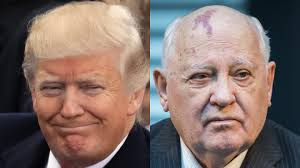
Gorbachev and Trump

Letter to The i Paper From W Moszczynski, 3 Isambard Court, Paddlers Avenue, Brentford Taw8 8FP, tel 07786471833.
Dear Editor, On reading Anne McElvoy's piece " Washington-Moscow reset begins" 18/02/25. I reflected on the unexpected comparison behind the potential destiny of Mihail Gorbachev and Donald Trump. One was the unexpected catalyst for the dismemberment of the Warsaw Pact and the Soviet Union, even though that was not his intention. The latter could well be the catalyst for the dismemberment of NATO and the EU though that was not necessarily his intention either. The difference was that the collapse of the Soviet bloc was a blow for freedom, while the latter's destructive efforts could lead to the extinguishing of freedom. Yours faithfully Wiktor Moszczynski
Saturday, 18 January 2025

100 year security defence pact with Ukraine

Dear Editor, I have no doubt that Keir Starmer was sincere in offering Ukraine an imaginative 100 year security defence pact, but, as you mention in your front page headline, "the UK army now 'too small' to play a major peacekeeping role in Ukraine" (17.01.2025), and his major material assistance is help with some future artillery shells and a Danish mobile air defence system, which is, as usual, too little, too late. The UK promises and Ukraine bleeds. It was ever thus. The Ukrainians know their history. It is a worrying mirror image of the Anglo-Polish defence pact in 1939 which brought the UK into the Second World War, while Poland was bled dry, with its population massacred, cities destroyed and independence sacrificed. General Beck and other members of the German General Staff were ready to organize a coup against Hitler as they expected France and Britain to honour the treaty with Poland and invade Germany from the West while it was still engaged in the war in Poland. However, in the end, Britain supported Poland with a shower of airborne leaflets over Germany and Hitler remained in power to set the whole continent of Europe on fire. Yours faithfully, Wiktor Moszczynski Flat 88 Isambard Court, Paddlers Avenue, Brentford TW8 8FP, tel 07786471833 Letter to The i Paper

Wednesday, 1 January 2025

The decision to invite EU migrants from central Europe to UK in 2004

Dear Sir I always thought that Tony Blair's decision to open up the UK labour market to Poles and other EU citizens from central and eastern Europe was a brave and positive decision justified by the needs of a booming UK economy and an early claim on the cream of the crop of entrepreneurial young EU citizens, who would inevitably have come to the UK in any case, under the terms of the Nice Treaty, over the next 7 years. On the day it was announced in the Commons in 2004 by Home Secretary David Blunkett, I was invited by the BBC, as the Federation of Poles in GB spokesman, to come to the studio, listen to the speech and then comment on it. I was genuinely but pleasantly surprised by the generosity of the Blair government's initiative, and commended its courage, as I could see its advantage to both the UK and the Polish economy, and to cementing better UK-Polish relations in the future. However, I was concerned by the vague sanctions over enforcing the Worker Registration Scheme and strongly urged that it should be linked to obtaining a National Insurance number, to be effective. I could also foresee the dangers stemming from the competitiveness of keen industrious Eastern European workers in the scramble for jobs, and I made some possibly undiplomatic public comments about young unemployed British jobseekers having to get up earlier in the morning. I also commented in my later report to the All-Party Parliamentary Group on Poland on the lack of preparation for making such a decision, because the migrants arrived as an elemental force, in uneven patches dotted around the country, against a background of highly inaccurate migration forecasts, which failed to prepare for the need to budget for interpreters and other support services in hospitals, local authorities, the law courts, employment agencies and other branches of industry and public services. As a result, a large number of smaller towns like Redditch, Peterborough, Luton and Boston, became culturally overwhelmed by the sheer numbers, while lacking the resources to cope with the new arrivals, despite the boost to the local economy. This lack of preparation and the uneven spread was an important contribution to the resentment against the new arrivals, encouraged by the right wing press, which eventually led to the fateful Brexit campaign. Wiktor Moszczynski 88 Isambard Court, Paddlers Avenue, Brentford, TW8 8FP (copy of letter sent to the i paper

Monday, 30 September 2024

Can Lebanon finally tame Hezbollah?

From Wiktor Moszczynski, 88 Isambard Court, Paddlers Avenue, Brentford TW8 8FP. Tel 07786471833 Dear Editor, Is there not another player who is being overlooked over the succesful raid on the late Hassan Nasrallah's HQ, referred to in your front page article on "Israel's warning to Iran" (28.09.24). For decades the warring native factions in the Lebanese government have been dreaming of eventually getting rid of Hezbollah's presence, which permamently leaves their country open to Israeli attacks. If not now, when Hezbollah is leaderless and with its internal communucation systems destroyed, and with Iran in a state of panic, then when? Yours faithfully Wiktor Moszczynski

Monday, 12 August 2024

Why I volunteered for a stoma pouch

Maggie's Centre, Charing Cross Hospital When I met the surgeon at St Mary’s Hospital, I was not ready for her sucker-punch. “We have to cut it out. All of it.” “All? All what? “The large colon. All of it.” I was stunned. “Does it have to be all?” “Yes, and the anal canal, as well. Up to and including the rectum.” Yet only three minutes before she had said reassuringly, “You do not appear to have cancer yet in your colon.” So far so good, I thought. “But,” she continued relentlessly, “you have high grade dysplasia cells (what??) along the whole length of the large colon. According to past practice, these cells will almost inevitably become cancerous. It has been building up in your colon over the past year or so because the inflammation of your cells has lasted for so long. As you know, you have had Crohn’s Disease, or ulcerative colitis, over the last twenty-five years. Well, the cells are now too weak to resist a cancerous growth.” “What other option do I have?” I asked. “Well, you can do nothing at all, and continue with your current treatment. However, then the NHS can do nothing more to prevent you from getting cancer.” As I reeled from this information, a sudden alarming thought occurred. “Then, if I have the operation, will I have to wear a colostomy bag?”. I could scarcely pronounce the word. She nodded. How long for? “Forever”. It felt like a death sentence. I only knew a couple of distant acquaintances who had worn stomas, but I did not know the details of how they lived and had never discussed it with anyone in the past. Living with such a bag seemed like some kind of life changing disaster, like going blind or losing a limb. This may have happened to other people, but (thank the lucky stars) it was not supposed to happen to me or someone close to me. So this was like a bolt out of the blue. I had merrily laboured with my Crohn’s Disease over the last decades. I had been told that the disease was incurable, but manageable. ”Your back passage is still a little angry today,” commented the head doctor, a description that had my female colleagues at work in stitches. I could live with that. The disease was an irritant, true, but at least it was painless, despite its uncertainties. The condition had caused me to undergo hospital infusions every six weeks, and the pleasure of a colonoscopy every two years, but this way of life seemed acceptable and bearable in the long run. I could imagine it continuing in the same way unchanged far into the future. True, Crohn’s could be treacherous at times, with its occasional urgency taking you by surprise, especially when your self-control might relax as you neared a restroom. It left me embarrassed every now and again, as on a bus, or on the high street in Tunbridge Wells, or in the middle of the Alexanderplatz in Berlin. I had become a past master on clearing myself up afterwards to disguise the mishap. In fact, I described living with Crohn’s Disease with a certain relish in my travel journal “Chasing Phileas Fogg: 80 Days on the Borealis”. I am 77 years old, but the Crohn’s did not prevent me from working for a Chamber of Commerce two days a week, or going to the gym, or having a very busy schedule for my work in the Polish community. It did not stop me and my wife going around the world last year on an 80 day cruise. However, in November I had seen the head of the Gastroenteritis Clinic in Hammersmith Hospital for what, I thought, would be another routine appointment monitoring my progress with the Crohn’s. As I came in, he looked kind of sad and shook his head gloomily. “I’m afraid,” he told me, “I have given you this treatment for as long as I could, but now we need to find more drastic solutions. We have observed the possibility of cancer, following the results of the latest colonoscopy samples we have taken. This may require some surgery,” he said ominously. He recommended an appointment for me at St Mary’s in Paddington with a surgical team. And so, I found myself in the presence of this lady surgeon with her alarming announcement as she metaphorically displayed her scalpel. “Some surgery” indeed! The new advice was such an unexpected body blow that I was left with a dilemma. Should I take this radical step to prevent a cancer which may, or may not, have yet invaded my cells? Or should I tough it out and carry on as before? Many of my friends counselled against surgery, although my wife felt that perhaps the surgical option had a certain logic to it. I read up the literature on it. What did wearing a stoma, or colostomy bag, entail? Well, firstly a colostomy bag is the wrong description for my case. That would have applied if only part of my large bowel had been affected and only that part of it had to be removed. In my case the whole of my large bowel or colon would be removed, my rectum sealed up and my waste would pass through the small bowel directly into a little plastic pouch attached firmly to my torso. This would be called an ileostomy bag. It would consist of a grey coloured leakproof plastic pouch with a simple velcro seal at the bottom. I would be able to empty it, when necessary, some five to eight times a day, and then change the bag every other day or so. It would be a lifetime commitment. There would be some nurses at a stoma unit in my local hospital to supervise my progress and arrange for my supply of fresh bags and other necessary accessories to make those regular changes. Otherwise, I would be on my own. It sounded dreadful. What were the dangers, apart from the obvious? An operation is always risky. There would be an uncomfortable stay in hospital. The brochure helpfully listed the risks, whether common, less common, or rare. Luckily most were in the rare column, but these could include hernia, wound infection, nerve injury, sexual dysfunction (oh dear!), significant bleeding, blood clots, abdominal fluid collections, and finally something headed briefly as simply - “death”. On the other hand, the operation, which is helpfully called a laparoscopic panproctocolectomy, is not exactly the cutting edge of surgery and it would remove the risk of developing cancer of the colon. There would be no need for chemotherapy, no long-term pain or risk of eventual death from cancer. For my surgeon it was a fairly standard operation, under general anaesthetic, and she would normally be able to perform it through keyhole surgery. She would slowly be removing my infected large colon through my right side until she reached the link with the uninfected small colon. This would be allowed to protrude for an inch or so from my body, like a little red stump. She would then place the stoma pouch over that. I had this weird image in my mind of my surgeon slowly and patiently pulling out my one and a half metre long colon, hand over fist, wondering when she would finally see the link to the small colon pop out. Gotcha. And I would not be on my own. Some 200,000 people in the UK have a stoma pouch, including famous singers, comedians, surfers and other athletes. It would not prevent them from being active. I was told that I should be able in time to continue my work and my community activities as before. After all, Napoleon had a colostomy bag following a gunshot wound, and it did not prevent him from continuing quite a busy lifestyle, including coronations, mistresses and staging quite a few battles all over Europe. I took a deep breath and said to myself, “Alright, let’s do it!” Some of my friends urged me to wait, but I saw no need to delay. I did ask my GP earlier for a second opinion, but then let it go. I asked the surgeon to give me a not-too-distant date that would at least allow me to have a scheduled book launch for my latest publication which described our 80-day cruise around the world. After that I was committed. The day before the surgery a stoma nurse at Charing Cross Hospital explained many of the ins and outs of living with a stoma pouch and pinpointed a spot on my right side where she expected my small colon to emerge. She marked it with a black pen. When I got home, I took a selfie of my face and upper torso, with the mark of doom clearly visible. It was the last picture of my body without a stoma pouch. Next day, I turned up early in the morning in Charing Cross Hospital. A team of surgeons, doctors, anaesthetists, and nurses were ready for me. The operation lasted 7 hours. Staying in hospital for 8 days was a drag, but one I had expected. Initially I was linked to various 12-hour infusions, with a so-called Robinson’s bag draining my single kidney (I had once donated the other kidney to my wife), a cluster of cannulas on each arm, while my poor willy was intimidated into submission by a catheter collecting my pee. I could feel some hard discomforting stitches between my bum cheeks protecting my newly sealed rectum. My stomas were being drained regularly by the ever-patient nurses. Within a few days, prompted by my eager surgeon, the staff had removed the catheter and the Robinson’s bag. Emptying a stoma, and closing it up afterwards with a velcro seal, proved child’s play, if initially a little messy. The real problem was to learn how to change the stoma pouch by myself. My initial two attempts, supervised by a special stoma nurse, left me so stressed that I nearly fainted each time. However, I realised that this was something I had to overcome as I would be responsible for this procedure for the rest of my life. So, before the stoma nurse’s next visit, I lined up the necessary accessories. These included the new bag cut to size to fit the stump of the protruding small colon, the ice-cold spray to remove the old bag glued to my side, a bowl of warm water, three or more biodegradable dry wipes, a moist barrier film wipe in a little sachet, and the black plastic bag to collect the debris at the end. I placed them on my bedside tray in the order of their use with the opened black bag first. Then I took a photo of this array. After that, when the nurse arrived, I proceeded systematically to make the change. It took less than 2 minutes. I pressed down the sides of the stoma now sticking to my body. The pouch held firmly, like on a kangaroo. I was now the master. Obviously, there was still a lot to learn but my recovery was beginning. I was ready to leave the hospital and face the world. The initial aim was to ensure that my waste was not too watery. At first, while still in hospital, the contents would just pour out, but then I was barely eating and limited my food intake to soft things like soup and rice pudding. As soon as I had recovered my appetite and had moved on to more solid food, my output became thicker and left the bag more grudgingly. In time I had to squeeze it out, like toothpaste out of a tube. However, my diet had to change. I now had to cut the crust off my bread, and the skin off my fish or potatoes, avoid stringy and high fibre foods, peas and sweetcorn, raw fruit and veg, and items with pips like grapes and strawberry. I should choose white bread rather than brown, corn flakes rather than weetabix, tea biscuits rather than digestives, soft eggs rather than hard boiled. Apart from that I could eat most foods. But I should learn to chew them and eat them slowly. I should avoid driving a car for some 6 weeks, stop any strenuous exercise or lifting any weights, but otherwise be active. Within 24 hours of leaving hospital, I was indeed out walking, buying newspapers, meeting friends in cafes, travelling on a bus. For my wife’s birthday, two weeks later, we travelled by Elizabeth Line for a 3 day "dirty" weekend to a riverside hotel in Maidenhead. My manhood was thankfully intact. As for heavy shopping, my wife and I switched temporarily to ordering our main food through supermarket deliveries. This was the new reality. I had learned to change the pouch every day in the morning before breakfast. As my last intake of food would be the previous evening, the morning procedure was not normally interrupted by sudden spills from the stump of the remaining colon. By the way, for those interested, the output is normally odourless, unless I had eaten some pungent fish or curry. I tended to drink less alcohol, as this generally made my output watery. I could even sometimes smell the alcohol even if I hadn’t drunk a drop. It would probably have been after a rich ready cooked meal, like a ragu. The red wine content would have made itself known. I do not feel embarrassed by the pouch and its content when at work or in a pub or café, even though it might just occasionally gurgle softly, and it would not normally require emptying until the evening. Some domestic issues that arose in my experience. Those tight Armani jeans pressing on my stoma was not such a good idea. They had to go. I needed to buy some looser clothes, especially trousers. An alternative was to have three pairs of my current trousers shortened by about three to four inches, and then to wear them under the hips, reinforced by a pair of sexy black braces. A month after the operation I did have one relapse, when I suddenly felt faint and found myself vomiting violently. Things had calmed down by next morning. I’m not sure to this day what caused this relapse, except that I had probably been dehydrated while carrying a heavy bag of shopping over an extended period. After that, I always took care to drink at least a litre of water a day, sipped gradually between meals. The advice is not to gulp great amounts of water at once, not to drink during a meal, and not to drink too late in the day. Otherwise, you would find yourself peeing every hour or so at night and losing out on your sleep. Mind you, those occasional nighttime trips to the loo were interspersed with the most vivid and colourful of dreams. I learned to sleep on my back so as not to crush my pouch. My wife had to put up more often with my snoring, but apparently it was rhythmic and subdued, rather than intrusive. I think she was being kind. At one stage I noticed that the right side of my groin had become red and sore, perhaps from the proximity to the pouch. I managed to deal with that by using a liberal sprinkling of baby powder on the affected area. Apart from that, I appeared to have had no unexpected side effects. The pouch never leaked as I made it sure it was sealed properly each morning. After 5 weeks I came back to work. I had wanted to return at least a week earlier. However, the relapse set me back and my return was rescheduled for the following week. The employers were exceptionally generous. They suggested that in the first few days I arrive only in the middle of the morning and work just for 5 hours. By then I had mastered my driving. That was after trying out several emergency stops in my underground car park, much to the consternation of my fellow residents. It was a 15 mile journey to work, but luckily I drive against the morning traffic flow as my work is outside London. The same week I returned to work I saw my eager lady surgeon. She checked my stoma, poked around my tummy to ensure it was still soft, and obligingly checked progress with the stitches which had been decomposing in my bottom. To me, they were still an irritation. It felt like someone had stuffed a bunch of cloying marshmallow up my behind. However, to her they were “a beautiful sight”. The resulting long scar along the rectum appeared to be free of infection and the delicate smooth skin that had formed alongside was now a permanent fixture. I would get used to it. After all, it was merely ornamental now, and not functional. So, all in all, I got a good school report from her. However, she had more dramatic news. A post-operation analysis of a polyp from my rejected colon revealed the presence of a category one tumour. This suggested I had indeed had stage one bowel cancer before my op. However, there appear to have been no lymph nodes affected. Because of this and because of the low level of cancer, my surgeon was optimistic that it had been nipped in the bud. To be sure, I was to have my liver and lungs checked and I would be under observation for the next five years to ensure the cancer had not spread. Also, she had appointed a Macmillan nurse to monitor me, as well as the stoma unit nurses at my local hospital. I was going to be quite spoilt with all this extra support. Despite the remote possibility of this cancer returning, I was delighted with the news. It confirmed that my operation had indeed been a necessity. A scan, which included the introduction of a contrast liquid, concluded that my lungs and my liver were not infected with cancer. My cheerful surgeon was delighted as well, but she did add a note of caution in that the cancer could sometimes return, especially in the next two years. In fact, I was called in by a doctor at my local hospital. It was like a mystery visit, as he was not sure why he had called me in, and I did not know what ailment I was supposed to be complaining about. Then, on checking his notes, he realized he was that “second opinion” that I had temporarily sought before my operation. He was delighted to hear that I had had the operation already, as that would have been his advice in the circumstances. He also prodded me about and gave me the third degree and his conclusions reflected that of the original surgeon. I was cancer free and recovering well. My lovely Macmillan nurse introduced me to a Health and Wellbeing Event for stoma and cancer patients at Maggie’s Centre, an isolated bright orange pavilion in the grounds of Charing Cross Hospital. It had a comfortable lounge, a kitchen, an isolation room, and a lecture room, surrounded by a little garden. A male nurse gave us a lecture, which included pictures and videos of young stoma-bearers showing off their pelvic muscles and young attractive female models wearing little round stomas over their bikini bottoms. We were told that wearing a stoma would not prevent us from swimming or surfing, running, or playing football, or pursuing whatever activity we carried out before. Some of those present chimed in with their experiences, including an elderly man who eventually had the courage to display his stoma while sunbathing in his swimming trunks at the poolside in Benidorm. I could imagine the resulting advert, “If you can wear it in Benidorm, you can wear it anywhere.” The guy got a round of applause like at an alcoholics’ anonymous session. There was a real element of camaraderie here. This was followed by a lecture on sex and cancer, but I dozed off for that one. While, mostly, I still shower wearing my stoma pouch, one of the true occasional joys is to have a morning shower immediately after removing yesterday’s pouch and before fitting the new one. The sheer pleasure of that warm water cascading off my completely naked body with its exposed little stump of a small colon, can only be experienced by a true stoma bearer. I did find after some time that I seemed to be losing weight, especially after a shower. I would be short of breath and quite tired after just walking to the shops and back. I did undergo a period where there was panic by my GP over an excessive strain on my thyroid hormones after my heart rate was observed as higher than 150 beats a minute. I was prescribed the appropriate medication, and I was told to continue eating and drinking sufficiently to see me through the storm. Nothing simpler. Now, 6 months after the operation, all I can say is that (touch wood) life is good. I eat well, sleep well, show off my grandad dance moves, enjoy my long 4 mile long canalside walks, travel to work by car two days a week, remain active in my community work, and travel by plane to Poland for the book fair. I can still occasionally pop into the gym. On those occasional hot summer afternoons, I lay down with my shirt off in the park, happily displaying my stoma pouch. Nobody cares or comments. I now wear an NHS supplied reinforced belt around my torso which offers me greater protection against hernia if I am carrying a heaver load or bending down. With that I was even able to drag over a 50 litre bag of soil for my wife from the underground car park to our balcony, although that was pushing it a bit. On a second visit to a cancer patients’ gathering at Maggie’s, I listened with respect as other patients described their experiences, their ups, and their downs. I felt a little bit of an intruder as I was the only one in the circle who had not experienced chemotherapy. Other patients warned me that I would not be advised of the possibility of the cancer returning until it was large enough to consider treatment, so I should not accept a statement that I was “cancer free” as being definitive. But I was also impressed with their attitude, especially those patients, like me, in their 70’s and 80’s, that, whatever happened, they appreciated that they were getting the best treatment possible, and that, although cancer could always return, we should all make the most of our lives and enjoy them for as long as we are given the time to do so. I then remembered the apt words of Robert Browning, which I quoted back to them, “Grow old along with me, the best is yet to be”. Wiktor Moszczynski

Tuesday, 6 August 2024

Response to the riots

Letter to Editor of "i" Anne MCElvoy describes in her article "After the honeymoon, Labour faces reality" (i 05.08.2024) the options for the new government in facing down the riots. The government is right to talk tough to the rioters and challenge the social media giants over harvesting misinformation and hate. However, a number of my friends and work colleagues still express some understanding for what they think motivates the rioters, following the abject failings of the previous government on illegal migrants and the more recent abandonment of the ill fated Rwanda scheme. That is why this is a good moment for the Prime Minister to reassure them by reiterating once again the new government's plans for the Border Force, the cooperation with the EU and the proposed increase in immigration staff to vet the asylum seekers. Yours faithfully, Wiktor Moszczynski

Sunday, 7 July 2024

There is a progressive majority of UK voters

To Editor of The Observer Dear Sirs, I would not like to share the pessimism of Robert Ford's otherwise careful analysis of the 2024 election results ("Labour risked heartland seats to target marginals. It paid off - but there's a cost". Observer 07/07/24). It is true that Labour's vote share was spread thin and was under 34%, up just 2 points on their disastrous 2019 defeat. However, Labour is part of a family of progressive parties (Labour, Lib-Dem, Green, Plaid Cymru), who between them managed to secure at least 55% of the vote. For the most part these parties survived the election campaign without attacking each other and the minor parties present themselves as the "conscience of Labour" ready to give Labour courage in carrying out its programme. To the Daily Express they may appear like a woke coalition, Even if the Tories and Reform were to combine forces, the progressive parties would unite against them, and the new right would remain a minority, both in the number of seats and in proportion of the national vote. Yours faithfully, Wiktor Moszczynski

Saturday, 6 July 2024

Release women prisoners

To Editor of i Dear Sirs, There is a much better short term solution for new Justice Minister, Shabana Mahmood, than being forced to "instigate a radical one-in, one-out emergency policy" ("i" 06.07.24) to tackle the Tories' prison overcrowding. There is a rising figure, currently over 3000, of women imprisoned in three separate jails. These are mostly mothers, wives, or single family breadwinners, whose punishment impacts even more on their children. 58% of prison sentences in 2022 were for less than six months duration. Why not a massive early release for women with non-violent offences, which could close at least one of the womens' prisons and convert it to a new jail for the new intake of male offenders. Yours faithfully, Wiktor Moszczynski

Tuesday, 2 July 2024

Will Starmer win that landslide?

- It seems such a generally accepted assumption that Keir Starmer will win a well deserved landslide for Labour. Simply put, the fact that Labour could actually win at all, after the massacre of the Brexit Tory landslide in 2019, seemed inconceivable just 3 years ago. Nevertheless, like Neil Kinnock before him after the 1984 disater, Keir Starmer managed to reform the party, stimulate the troops who were hungry for success, and has now brought the party to the brink of victory. However, for Kinnock, that was as far as he could take it. Personally, Kinnock failed and needed to give way to a new leader in 1992 to get the party over the line. This finally happened with Tony Blair as leader in 1997. Which path will Starmer follow? - It does not help that the election has largely been so dull that it has not yet even now impacted on public awareness in day to day activities. Where are the window bills, leaflets handed out in the street, loudspaker events in each constituency? Where is the buzz? It has all gravitated to social media, online propaganda, TikTok messages and TV debates. Unlike Blair, Starmer's personality has not yet lit up the election. Many will decide how to vote as they walk to their polling station. - Could Starmer end up like Kinnock, fallen at the last ditch? In the last days the doubts and the shy Tory factor have been at work. There is still a massive apathy among non-committed voters based largely on which party they dislike or distrust most. Actually, I am sure Starmer will be Prime Minister by Friday, in time for that precious evening with his family. It seems impossibe now with such a visible steady 20% gap maintained for over a year, and only now slightly shrinking, to be wrong. The humiliation of the Tories at the hands, not only of Labour, but the Lib Dems and Reform as well, is a given. However, Starmer, a steadfast, honest and competent person, still does not convince the average floating voter. Yes, the remains of the Labout tribal vote will be out for him, but, even there, former Corbyn Labour voters are slipping away to vote for the Greems, the Lib Dems and for Muslim independents. For Starmer has remained too buttoned up and stressed, too anxious not to lose the family silver in the debate, to really display his vision and his passion to lead the party and the country to victory. - In the end, he will make it, there will be a majority, the Tories and SNP will be humiliated, the Lib Dems may vie with the Tories to take on the mantle of the official Opposition. Yet Starmer's majority may not be as great as some are dreaming. Perhaps a 75 to 100 seat majority? The Daily Telegraph is predicting a majority of 159 seats, but that is deliberate scaremongering to raise the Tory vote. - Perhaps, it woulld be just as well for the majority not to be too large. The oven-ready government programme which will form the main part of the King's Speech, will cover the major first steps announced by Starmer, and will be carried through with discipline and aplomb. But if the majority is too large Starmer and McFadden will not be able to control the restless opinionated and relatively young idealistic backbenchers. After 2 years, if growth fails to materialize, conflicts and even Labour splits may arise. The Tories will be too marginal as an opposition, and the Lib-Dems too soft. (After all, not a word of criticism of each other passed throught the lips of Labour and Lib Dem leaders during the election debates, though the two may end up in serious conflict over protests against housing developments once Labour has simplified the promised new planning laws.) The real opposition could come from Reform, if it does take over the Conservative Party, and they can stage a real populist revolt. It all depends on whether Farage will get his public platform by winning in Clacton. Labour should be shoring up the Conservative vote there. In these circumstances Labour could end up in trouble by the end of the next term. - The Labour domestic green agenda will proceed successfully as long as there is the growth that Starmer is relying on. But here is the problem. There can be no successful improvements in services unless economic growth can fund them. Relying on energy companies and pensions for financial windfall support will not be enough. Growth must come over the next 2 years. But how can Britain expect growth with the threat to Europe from Russia continuing, the brutality of the Gaza war, the growing right-wing radicalization in western and eastern Europe, and the chaos likely to emanate from the USA after a broken Biden has surrendered to Trump. Let us remember too that Trump is protected now by his immunity to prosecution, as a result of the recent Supreme Court ruling. Only Biden can save the day here by retiring immediately to let younger democrats challenge Trump, but can he do that? Out of Starmer's control, unfortunately. He also needs good relations with these more difficult neighbours to find better solutions to illegal migration and the gnawing boat problems. I am counting too on good relations with the liberal governments in Germany and Poland. - So, yes, Labour can get their decent majority on Thursday, if not a bruising landslide, but they face a very bumpy road ahead, trying to provide the steady reform they promised in a chaotic hostile world. I wish them a successful decade in office.

No Seats for Reform

to Editor of i Dear Editor, It is precisely because (as Kitty Donaldson puts it yesterday's "i") "Farage's long shadow is eclipsing the Tory party", that Labour and Liberal-Democrat activists should size up their strategy in constituencies, like Clacton, where they are unlikely to win and Reform could take the seat from the Conservatives. Indeed, a resilient Farage on the national stage, who can toss around false promises in his contract manifesto with gay abandon, would be a much more dangerous adversary for Labour in the difficult months to come than the Tory rump, and that is precisely why in those constituencies, both the Labour and Lib-Dem electorate should be encouraged to support the local Tory and deny Reform a place in parliament. Yours faithfully, Wiktor Moszczysnki,

Monday, 20 May 2024

Free Marwan Barghouti


I have for some time hoped that the charismatic Marwan Barghouti could in some middle distant future be released from jail and become the new Nelson Mandela who could be able to bring about a political solution and eventually peace to Palestine. This view has been reinforced by your article "Abuse of jailed Palestinian leader Barghouti amounts to torture" in The Observer" on May 19th. and it is time that Britain's political leadership should seek to make representations on his behalf to the current less belligerent members of the Israeli government. Barghouti is not a member of Hamas, but enjoys the support of so many of his people, whether Fatah, Hamas or politically uncommitted. The Israelis consider him a terrorist, but Mandela was also condemned as a terrorist in his day, and Yasser Arafat's crimes did not prevent Israel from making a deal with him subsequently. The crazed Netanyahu/Hamas blood bath must stop and it is time for adults like Marwan Barghouti and Benny Gantz to take over.

Yours faithfully,
Wiktor Moszczynski

Letter sent to the Editor of The Observer

Sunday, 7 April 2024

Draft Federation Letter to Israeli Ambassador on Damian Sobol


To Ambassador Jakov Livne,

Israeli Embassy

Ul. Ludwika Krzywickiego 24,

02-078 Warszawa,

Poland

Thursday, 4th April 2024

Dear Mr Ambassador,

The Polish community in the UK was horrified by the massacre of Israeli citizens on October 7th by

Hamas terrorists last year, and has always believed in the right of the state of Israel to exist and

to defend itself.

However, that outrage cannot justify in any way the deliberate targeting and killing this week in

three separate vehicles of 7 foreign aid workers from the charity organization World Central

Kitchen. In particular, the Polish community was shocked that one of the innocent victims of these

three separate attacks was an experienced Polish aid worker Damian Soból, who had previously

worked as a volunteer aid worker in Ukraine and Turkey, and equally shocked at the news

of British victims of this attack, John Chapman, James Henderson, and James Kirby. Their only

motivation for their presence in Gaza was to help the victims of famine and disaster. Even though

the Israeli Prime Minister has admitted that the Israeli Defence Force caused these attacks,

neither he, nor the Israeli Ambassador in Poland, have apologized fully for these deaths, and the

latter has caused further outrage to the people of Poland and to the Polish community in the UK

by using this incident as an opportunity to enter a polemic about alleged antisemitism in Poland.

We believe that the Israeli government should issue a public apology for this incident, as well as

conduct a full investigation to establish who was personally responsible for this decision, while the

families of these 7 victims should be fully compensated by the Israeli government.

We further believe that the possibility of further such deaths of innocent victims can only be

prevented by the government of Israel responding positively to calls from Israel’s friends and

allies for an immediate cessation of hostilities in Gaza.


Yours faithfully,


Alicja Donimirska

Chair of the Federation of Poles in Great Britain

cc to Israeli Ambassador in London

Draft of Federation letter to Keir Starmer on EU citizens


Dear Sir Keir,


As the umbrella body for the main Polish organizations in the UK since 1947 we strongly urge you to announce that a future UK government led by yourself would offer default UK citizenship to all Polish and other EU citizens living in the UK with settled status. We believe that you could also eventually extend this to those with pre-settled status as soon as their 5 year temporary status expires. You would be right to think that this would reassure them of their continued further integration into the UK economy and into the social and cultural fabric of this country. It would also fulfil the promise made by those campaigning to leave the EU in 2016 that the security of EU citizens living in this country would be assured.

While we have strongly supported the recent campaign by the3million and others to extend voting rights in parliamentary elections to those EU citizens with settled status, yet this proposal has not yet been adopted by either of the main political parties. Consequently, more than 4 million UK taxpayers with EU citizenship remain without parliamentary representation in this country. We feel that their chance to have automatic access to UK citizenship, despite the inevitable initial fee, would resolve in a more straightforward way the issue of their current disenfranchisement. Parliamentary voting rights for EU citizens as EU citizens, would require introducing a constitutional change, but this would not be true of a decision to extend UK citizenship to them. Currently, while they are valuable stakeholders in British society and the British economy, they are still living at the whim of possible Home Office reinterpretations of their status, similar to that faced by the Windrush generation. They live with the status of “immigrant” which makes them feel vulnerable each time the issue of immigration arises in public debate. 

At least 1.138 million Polish nationals in this country have applied successfully for either settled or pre-settled status and have long been making a valuable contribution to this country. It would be advantageous for a future UK government to cement that positive achievement with the unconditional offer of UK citizenship. We look forward to your confirmation that you would want to  proceed with this generous but sensible proposal.

Yours sincerely