Polish Londoner

These are the thoughts and moods of a born Londoner who is proud of his Polish roots.


Sunday, 26 July 2020

Polish government accused of risking “a serious breach” of the rule of law


In the October 2015 elections for the Polish parliament, the Law and Justice Party (PiS) won an outright majority with an ambitious Poland First programme of so-called “good renewal”, which included a generous social welfare programme and a desire to overturn their predecessors’ social and economic policies.

PiS is ultra-nationalist and socially conservative, opposing (indeed reversing) LGBT rights and women’s rights (for example, they have said they will take Poland out of the Istanbul Convention on preventing and combating violence against women and domestic violence). They also opposed taking a share of Syrian refugees because they didn’t want to undermine Poland’s Catholic identity. Their leaders are obsessed with exposing the supposed criminality of the post-communist political and economic establishment and its failure to challenge the EU’s liberal social agenda.


In particular, they blamed a self-perpetuating independent judiciary that they claimed to include judges from former communist Poland. In fact, there were barely three former communist lawyers left in the Supreme Court out of a total of 125 members, as the remainder had long been retired. PiS’s self-declared mission to brook no opposition to their economic and social programme led it to uproot democratic conventions and cut legal corners with a series of measures that subjugated the judiciary and the state media to their party political “control”.


Since 2016, a number of EU and even UN institutions have criticised the changes to the political framework by the PiS government, but with only a limited effect. On 20 July 2020, the committee on civil liberties, justice and human affairs (a committee of the European Parliament) issued its latest interim report, urging the EU Commission to take punitive measures against Poland because of “a clear risk of a serious breach by the Republic of Poland of the rule of law”.


The report recounts in great detail the measures taken by the PiS government to erode fundamental human rights and subvert the independence of the judiciary in Poland. This has taken place not in one fell swoop, but as a result of a thousand cuts, each moving forward the agenda despite attempts to prevent each transgressions by either an outvoted and demoralised internal opposition, or by the various EU relevant institutions.


In a 20-page document, the committee lists the abuse of powers by the new parliament from December 2015 onward when it assumed powers to revise the constitution and curtail the independence of the civil service, the police, the Public Prosecutors’ Office, the ombudsman for human rights, the National Media Council and the judiciary. In particular, the committee criticised the merging of the hitherto non-political office of prosecutor general with the political post of justice minister. The new parliament also redesigned the judiciary by politicising the appointments to the Constitutional Court and by introducing new institutions. These new institutions included the Chamber of Extraordinary Control, the National Council of the Judiciary, and the Disciplinary Chamber, all staffed with the justice minister’s nominees in order to control and even purge judges both in the independent supreme court and in local courts.


This has led to a dangerous duality in the Polish justice system where, for example, the current Supreme Court passed a resolution refusing to recognise the validity of pronouncements by the government-controlled Disciplinary Chamber, while the government-controlled constitutional tribunal declared the Supreme Court’s resolution as unconstitutional. The committee acknowledged that the organisation of the justice system is a sovereign national competence, but EU members are still required to ensure their legislation does not breach EU law, and in particular the separation of powers between the legislature, the executive and the judiciary.

Other aspects were criticised too, such as the work of the National Media Council changing the state television into a crude propaganda outlet for the ruling party and for its candidates in the ensuing elections. The committee also highlighted concerns over new legislation that has curbed: academic freedom; freedom of assembly; freedom of association; privacy and data protection; religious indoctrination in schools; the right to a fair trial; the right to information; and freedom of expression in the conduct of public life in Poland.

The committee found that legislative changes brought in by the ruling party have also encouraged hate speech, public discrimination, violence against women, domestic violence and intolerant behaviour against minorities. It concluded that these measures in Poland “amount to a serious, sustained and systemic breach of the rule of law”. These, and other crucial pieces of legislation, were passed with excessive haste and little chance of adequate public consultation or parliamentary scrutiny, mainly late at night, in an atmosphere fraught with tension and anger where bullied opposition MPs had their mikes switched off after one minute of debate.

The committee has called on the EU Commission to use all tools at its disposal including budgetary controls and voting rights under Article 7 the Lisbon Treaty, to ensure “all EU countries respect the common values of the EU”.

In view of the narrow victory of its candidate in the presidential election on 12 July, the ruling PiS shows no inclination to comply with the resolution of the committee. The EU Commission is also currently not in a position to lay down the law, because it needed a unanimous vote at the European Council summit that concluded on 21 July, to pass through an ambitious package of 750bn euros to combat the Europe-wide economic crisis following the Covid-19 lockdowns on the continent. The Polish government would only give its consent to this package of measures, through which it would receive a generous provision, if it was agreed that there would be no curtailment on Poland’s access to these funds because of its breach of European law.

The wording of the final agreement was something of a fudge. The distribution of funds would be subjected to majority voting and not unanimity, but the Polish prime minister was assured that the EU Commission would design the new budgetary safeguards so that the funds would not be threatened by any disciplinary measures against Poland. The European Parliament has already passed a resolution expressing concern at this ambiguity. At the same time, the Polish justice minister has bitterly criticised the prime minister for not clearing up the ambiguity at the summit, as it appeared to threaten the continuation of his party’s authoritarian “good renewal”.

The EU Commission is to publish the budgetary mechanism for issuing the funds at the end of September and then we shall see, in the resulting confrontation between the EU Commission and the Polish government, which side will blink first.


Tuesday, 21 July 2020

Republic of Two Polands


The second tier of the presidential election in Poland has consolidated the painful existence of a Republic of Two Polands. The one is conservative, Catholic, elderly, with a Poland First siege mentality, frightened at losing the social benefits introduced by the Law and Justice Party, such as a decent minimum wage and a sizable drop in poverty. The other is young, entrepreneurial, socially liberal, Europe friendly, tolerant and frightened of losing the civic benefits of living in a western democracy, such as independence of the courts, freedom of the press and tolerance of minorities.


The current direction of travel of the present government suggests a deepening conflict over those civic rights even as the post-covid recession erodes the economic gains. Only true statesmanship by an uncharacteristically independent President Andrzej Duda and by a courageous opposition leader Rafał Trzaskowski, ready to shed his Civic Platform anchor, could prevent the coming confrontation between the two Polands from exploding into civil conflict and mass unemployment. Their cooperation could unify the country around new national and local climate-friendly and family-friendly infrastructure projects and around a common policy of cooperation with a post-Trump USA in strengthening European security against Russian and Chinese interference.     


Letter to The Economist  


Monday, 18 May 2020

Letter to Russian Ambassador - Denial of Katyn in Russia


P R E S S S T A T E M E N T

The Federation of Poles in Great Britain C.I.O, based in London, which has represented Polish organizations in the UK since 1947,has sent a letter this weekend to the Russian Ambassador in London to protest at the removal by Tver city authorities in central Russia of plaques which commemorated the mass execution by the NKVD in April and May of 1940 of 6311 Polish military and civilian officials.
The local prosecutor and mayor in Tver have claimed there is no documentary evidence of the massacre despite all evidence to the contrary and despite acknowledgement of the crime by the Russian government. Prime Minister John Major recognized in 1991 that the British government held the Soviet government responsible for this wartime massacre. The Federation asks the Russian Ambassador to forward the protest both to President Putin and to the local authorities in Tver and urges that the plaques are restored in a public ceremony.
The executions at Tver have been public information in Russia since 1990 and the site of the killings was initially open to the public. The executions at Tver were part of the "Katyn massacres" of more than 22,000 Polish military and civilian personnel who had been captured by the Red Army after the joint invasion of Poland by Nazi Germany and Soviet Russia in September 1939. It was one of the most heinous crimes of the Second World War which the Soviet government had blamed for many decades as being a Nazi crime even though overwhelming evidence showed that the executions were carried out by the Soviet secret police, the NKVD, at the express instructions of Joseph Stalin and the Politburo.

"Katyn denial, like Holocaust denial, is a standard feature of the growing radical nationalism in the Russian heartlands, and it is vital, in tthe interests of the survival of democracy in Russia, that the plaques are restored and due respect is paid to the memory of those Polish prisoners of war killed in Tver, Katyn, Kharkov and other places of execution in Russia as well as of all other victims of the Red Terror in the Soviet Union," said Federation spokesman and trustee Wiktor Moszczynski.

Issued by the Federation of Poles in Great Britain, 240 King Street, London W6 0RF

For futrther information please contact Wiktor Moszczynski, tel. 07786471833


His Excellency Mr Andrei Kelin, 16 May 2020
Russian Ambassador,
6/7 Kensington Palace Gardens
London W8 4QP

Your Excellency,
This week we have seen a film showing the illegal removal of plaques commemorating the mass murder of Polish citizens in the former NKVD headquarters in Tver between 4th April and 16th May 1940. This follows reports of a grotesque statement by the local mayor in June last year that there is no documentary evidence for this crime, and a subsequent letter from alocal prosecutor’s office to the Chancellor of Tver State Medical University (current landlordof the former NKVD building) to have the plaques removed.
It has been known since 1942 that 6311 Polish officials had been held in a prisoner of war camp at Ostashkov following the joint invasion of Poland by Nazi Germany and the USSR in 1939. Since 1990 we also know that they had been brought to the black panelled cellars of the NKVD in Tver to be executed at a rate of 250 every day with a single shot in the back of the
head and then their bodies were dumped in an unfenced site in Miednoye, 30 kilometres from Tver, where they were buried unceremoniously in long trenches. Their bodies had been discovered in 1990 and initially unearthed by Memorial, a local human rights group. The bodies are now reburied in an official commemorative site visited each year by relatives of the victims, Polish consular authorities and local officials. For a short period, the site of the executions was even open to visitors.
As you are aware, in October 1992, at the request of President Boris Yeltsin, Professor Rudolf Pikhoia, Director of the National Archives of the Russian Federation, presented President Lech Wałęsa with original documents showing, first, a motion by Lavrenty Beria, Commissar for Internal Affairs, arguing for the shooting of 25,700 interned Polish officers and, second, a positive response approving the motion at a meeting of the Politburo of the Central Committee, signed by Stalin, Voroshilov, Molotov and others. In the meantime, Russian military prosecutor Colonel Anatoly Yablokov, in charge of the Katyn case, concluded a 3-year investigation in 1993 that named Stalin and members of the Politbureau as guilty of the mass execution of Polish officers. This evidence and these findings were entirely consistent with all the evidence on the case held by the wartime Polish government and by the U.S.House of Representatives Select Committee in 1952. They were further supported by masses of later evidence from NKVD and other Soviet state institutions gathered by the Polish Institute of National Remembrance. Soviet guilt for the crime of Katyn is now the common conclusion held by every government and every independent historical institute throughout the world.

At the site of the Katyn massacre in 2010, at the 70th Anniversary, your Prime Minister, Vladimir Putin, now President of the Russian Federation, rightfully acknowledged the Soviet authorship of the Katyn crimes when he stressed the common suffering of Russians, Poles and other ethnic groups under Stalin’s rule. He said that “with decades of cynical lies, they tried to blot out the truth about the Katyn shootings.” and appealed that all parties “should come to terms with a common historical truth and realise that we cannot go on living in the past alone”.
We must protest therefore at the removal of the plaques commemorating the 6311 Polish victims of the Tver massacres. We see this act as an insult to the memory of these victims, to the victims’ families and to countless millions of other victims of Stalin’s terror, as well as a rejection by the local authorities in Tver of the “common historical truth” which the Russian government had previously acknowledged. We urge that the plaques be restored immediately in a public ceremony as this would be in the interests of good future Russian-Polish relations and an acknowledgement of international concern at such a blatant attempt to revise the truth about Russia’s past.
We request that you forward our protest both to the President of the Russian Federation and to the local authorities in Tver.
Yours sincerely,

Włodzimierz Mier-Jędrzejowicz
Deputy Chairman, Acting Chairman, Federation of Poles in Great Britain

Wednesday, 13 May 2020

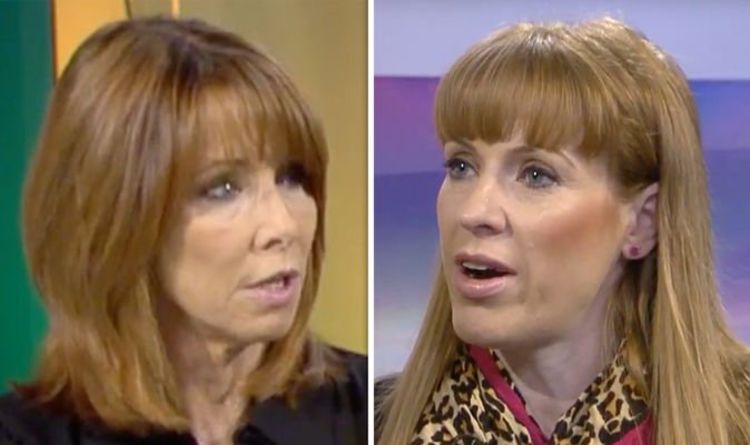
Kay Burley - Sky News seeking partisanship over Covid


Why is Kay Burley of Sky News so determined to undermine a two party consensus on the broader strategy of tackling the covid-19 epidemic?
I think both Conservative and Labour politicians should complain when a news presenter seeks to politicize constructive criticisms by politicians such as Angela Rayner into hostile declarations of responsibility on deaths which should best be delayed until the public enquiry on the coronavirus pandemic in the UK os held next year.
For now we have to combat the virus together.

Friday, 17 April 2020

Polish democracy in crisis


As someone who has spent more than 50 years of his life campaigning for a free democratic Poland in a free democratic Europe, I am especially saddened by the current attempts of the Polish government to take advantage of coronavirus restrictions to ram through parliament a total ban on abortion, the banning of sex education in schools, reintroducing children into blood sports and conducting presidential elections on May 10th by an improvised untested method of universal postal voting. This dramatic change in the voting system was introduced with barely a month's notice, contrary to the constitutional requirements that any changes to electoral law should be made at least 6 months before the next election. Also this election disenfranchises all Polish citizens living abroad in countries where there is also a lockdown and social distancing measures.
These proposals are very controversial while the obsessive obstinacy in holding the election in the middle of a universal lockdown is justified solely by a need to retain power and reimpose by the back door "traditonal Polish values" on society. It forms part of the government's unilateral attempt to self-exile Poland from all aspects of EU traditions and values while still retining its access to generous EU regional and agricultural subsidies.
The sad thing is that I recognize these so-called "Polish values" as being outdated values common in the UK and other Western countries only 30 years ago, but long since abandoned as outdated.. There is nothing innately "Polish" about them. They are in contradiction to Poland's traditional call for "Your Freedoma and Ours" and are not shared by a large section of modern Polish society. They signify not the indigenisation of political culture in Poland but its anachronism.
Unfortunately pursuing this election and this controversial legislation while the Sejm is not fully functioning could also undermine public confidence in those vital measures rightly taken by the same government to combat Covid-19.

Thursday, 16 April 2020

Sluggish UK response on repatriation


Dear Editor of "i", 11th April 2020

The “i” has been exceptionally generous in giving Dominic Raab the benefit of the doubt as to his fitness to be First Secretary of State at this trying time during Boris Johnson’s illness (“Johnson is released from intensive care but remains in hospital” “i” 10/04/2020).
Promoted largely because of his Brexit fundamentalism and betrayal of Theresa May while her Brexit negotiator, Mr Raab has misled the public over Mr Johnson’s apparent “hands on” control of Cabinet meetings while in hospital and shown himself singularly uninspiring in his major current task as Foreign Secretary, namely to repatriate UK citizens from abroad. The “i” reported in early April how he still had 50,000 UK citizens waiting to be brought back and he fumbled in his replies on the issue in the House of Commons.
Other countries have been far more effective in repatriating their citizens. Acting on behalf of the Polish government, for instance, LOT Airline was able to repatriate 54,000 Polish citizens from 71 airports around the world in 388 flights. From the UK alone 21,000 passengers were flown back to Poland and last Sunday LOT even carried two plane loads of UK residents waiting for 3 weeks to be brough back from Warsaw to London. I had expected a more effective response by our “acting Prime Minister” in Westminster.


Yours faithfully,

Wiktor Moszczynski

(unfortunately not published)

Wednesday, 8 April 2020

Landscape After the Virus: 15 ways the world will change


Here in the UK our world has been turned upside down in the last month. The sinister coronavirus Covid-19, which originated in the wet meat markets of Wuhan in November and has then spread from Asia to other continents, most notably, to Europe, the Americas and Africa, has infected by today more than 1,434,426 and killed more than 82,220. In the UK alone there are 55,242 recorded infections and 6,159 deaths. Because of delayed testing the amount of infections is much higher. One third of the world’s population is undergoing various stages of lockdown, with international travel suspended, the economy in freefall, massive injections of state money pouring in to support private businesses, while on the front line health workers battle to save lives without adequate personal protection, delayed testing equipment, insufficient number of beds and respirators and no vaccine available to cure the disease before next year.
In the UK, because we are all affected to one degree or another by the pandemic, there is a sense of solidarity and equality in society to a greater extent than before. That may help us live through it in the short run, but social tension and real economic hardship may increase in the months that follow if there is no visible reduction in the number of infections and deaths. In order to maintain social cohesion, the government may even invite the opposition parties to join. We do not know how long this danger will last and whether our health, our economy and our personal sanity will survive. But if most of us come out of this at the other end alive and economically active it will still be a different world from the one we inhabited just a month ago.
Firstly, the government is likely to go for an exit strategy on the new social controls on social distancing only gradually with the option of enforcing them again in case the casualty and infection rates rise again. In the UK we are likely eventually to see our original freedom of movement restored even if we have to wait for the eventual vaccine early next year, but in other, more authoritarian so-called “democracies”, like Russia, India, Egypt, Turkey or Hungary the emergency legislation could remain in force for many years. If those governments had proved incompetent, they could face considerable unrest and even revolution.
2/ However, the radical economic measures taken by governments, including the 80% job guarantees, the tax and mortgage holidays, the nationalisation of rail and airlines, could remain in force for longer as the government supervises the recovery of a fragmented economy. In Europe and America $8 trillion worth of state loans and tax holidays have been promised to business. The public will want to see a new post-virus UK economy without the economic austerity and social inequalities of the past. A form of coalition government, state control of many industries and services and a planned centralized economy could stay in force for a few years more. In fact the governing Conservative Party may split over when and how this new centrally managed economy should be dismantled. This may cause a new election and a Labour Party committed to maintaining a planned central economy in order to maintain the more egalitarian and socially cohesive aspects of the crisis, including a higher taxation rate fairly distributed between the more and the less wealthy.
3/ The health service budget is likely to replace military spending as the main priority of the government in the UK and in most Western countries. Protection against viruses will replace protection against missiles as the primary concern of security as predicted 5 years ago by Bill Gates. The health industry workers and international research scientists will form the new elite of society and the new media celebrities.
4/ Second only to the health service will be concern over constant modernisation of information technology, accessible broadband, artificial intelligence and defence of cyberspace. Increasingly decisions will be made at video conference meetings within government bodies and commercial companies, both nationally and internationally. More employees will work online from home. IT experts, especially in the field of security, will replace the current dominant role of accountants on company boards.
5/ The need for commuter and international travel will be reduced and airlines and transport companies are likely to be used more for personal recreation and tourism rather than for business travel.
6/Nevertheless, border restrictions may be retained to ensure no transmission of an epidemic from country to country.
7/ Education at school and at university level will be more reliant on IT skills and online individual teaching.
8/ The high street will wither away unless it becomes an entertainment hub as well as a shopping centre; retail shops without online sales will become obsolete.
9/ Future governments would be wise to acknowledge the role of manual labour in maintaining the health service, the care industry, refuse collection, strategic industries and agriculture by ensuring them a decent level of income and social status.
10/ The current reduction worldwide in the use of transport and industry will bring a welcome pause to global warming but the need for reindustrialization and the continued challenge to climate control by the United states, Russia and Brazil could undermine any gains from that pause.
11/ With the onset of world recession and the growing threat of the coronavirus in poorer third world countries with limited medical resources and lack of adequate urban space for social distancing, the resulting Covid-19 pandemic could be accompanied by major famine and the increasing pressure from economic and health refugees seeking out a safer new life in the more prosperous countries of Asia, Europe and North America. Consequently, interventionist international cooperation, such as the proposed World bank $160 billion loan to poorer countries next month, and a moratorium on third world debt, is likely to grow at global and regional level despite the challenge of nationalism.
12/ Globalism will be less reliant on uninhibited free trade and more on centrally managed international strategies. International summits like the recent G20 based in Saudi Arabia are likely to be managed by world leaders attending through online conference calls and will be as concerned with health, education and information technology as with the economy.
13/ Faced with hostility from Russia, China and the United States, the European Union will struggle to retain its relevance. It has to challenge the nationalist agenda in each country, agree to the issue of coronabonds to supports the weaker Mediterranean economies, maintain outside EU borders against newer migrants and take a lead in ensuring a resilient health service fighting these and future epidemics in each country. Otherwise it will die.
14/ Because of continued US withdrawal from the role of a world leader under its current president, the XXI century is likely to be a Chinese century. China, having survived the coronavirus epidemic so quickly, continues to supply medical expertise and supplies throughout the world, and gives crucial low interest loans to third world countries increasingly struggling with the virus. Chinese style intensified social control, cybersecurity and lack of human rights will increasingly become the model for the new world order.
15/ The Western liberal democracies will no longer be the universal model for development and will be under constant challenge from authoritarian regimes and nationalist movements.
It will all make a brave new world.
Published also on You Tube 08/04/20 https://www.youtube.com/watch?v=p3Hu_g0YcVs&lc=Ugy_bBgMm3DSfirGX2F4AaABAg

Saturday, 21 March 2020

Boris Johnson's Northern Ireland Brexit Fallacy


Quoted from BuzzFeed
"Boris Johnson says: “Actually Northern Ireland has got a great deal. You keep free movement, you keep access to the single market.”
Boris Johnson spoke to local Conservative members in Northern Ireland on Thursday 19th March about his Brexit deal and it was… interesting. A video of part of his speech has gone viral — not least because the prime minister said how much of a “great deal” Northern Ireland was getting by staying in the EU's single market and keeping “free movement”, unlike the rest of the UK.
Johnson also insisted there would be no checks at all on goods going from Northern Ireland to Great Britain. But questions have been raised about some of his assertions — as well as his delivery, which some people likened to a drunk uncle at a wedding."

My comment on above:
I cannot accept what the PM is saying. If there are no border controls after December 2020 between GB and NI and NI continues to be part of the EU single market then every self-respecting smuggler or sharp trader will know that:
1/ EU goods can be delivered to an NI address without border checks or payment of tariffs and then shipped unchecked on to GB pretending to be NI goods:
2/ any GB goods can be delivered to an NI address without border checks and then shipped without paying any duty to the EU via Ireland by pretending to be NI goods
3/ Any manufacturer or trading company producing goods in the USA or Australia or any other country with which the UK will make a trade deal in the next couple of years will be able to deliver goods to NI via GB and pretend they are NI goods which can then travel into the EU via Ireland unchecked
4/ Similarly EU goods could cross into NI without paying tariff and eventually reach any of the UK's new trading partners pretending to be NI goods if no controls between NI and GB.
Agricultural goods in particular could be traded in this way.
Possibly this could be checked by customs officers checking documents internally wuithin NI and GB but that still amounts to customs control between NI and GB even if not at the actual border.
Boris Johnson's former Brexit Secretary of State Stephen Barclay admitted as much but he is now First Secretary to the Treasury and has no longer commented.